It was Holocaust Memorial Day last week and my son, a teacher was asked to take the school assembly and reflection the meaning of the day. I am unable to embed the Youtube video of Szpilman actually playing the music referred to, but here is a link https://www.youtube.com/watch?v=n9oQEa-d5rU which may work. If you ever saw the film The Pianist then all will be clear. I think the information is worth repeating, especially in these deeply troubled times. The target audience of this piece is children – but not only.
“Today is Holocaust Memorial Day, a time when we remember the millions of people who suffered and died during the Holocaust. The word ‘Holocaust’ comes from a Greek word meaning ‘completely burned’ and is used to describe the murder of six million Jewish people by the Nazis during the Second World War, as well as the persecution of other groups they targeted. Today we also reflect on those who survived, and the lessons we can learn from this dark chapter in history.
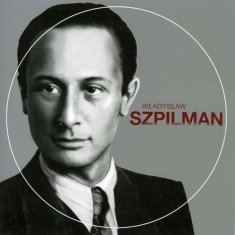
The music we were just listening to was the Nocturne in C-sharp Minor by the Polish–French composer Frédéric Chopin. It was played by a Polish–Jewish man called Władysław Szpilman during a live radio broadcast in September 1939, a date you will recognise as the start of the Second World War.
The Nocturne was the last piece of music heard on the radio station Polskie Radio before it went off air. On 23 September 1939, as bombs fell near the Polish Radio building in Warsaw and gunfire reached the area, Władysław Szpilman, who was performing live in the studio, was forced to stop playing.
Szpilman was a talented pianist and composer, born in southern Poland in 1911. He started playing for Polish Radio in 1935 as their house pianist and was well known for his performances, bringing music into the homes of people across Poland. His life changed completely when Nazi Germany invaded Poland on 1 September 1939.
The Nazis introduced laws targeting Jewish people almost immediately. Jews were forced to register their identity, wear yellow Star of David armbands and obey strict curfews, which meant they were only allowed outside during certain hours. They were banned from schools, cinemas, theatres, libraries, museums, parks, swimming pools and public transport. They were forbidden to own businesses or property, ride bicycles or even keep pets. These rules separated Jewish people from the rest of society and stripped them of their rights, their dignity and the chance to live normal lives.
In 1940, Szpilman and other Jewish residents of Warsaw were forced into the Warsaw Ghetto, a tightly packed area enclosed by high walls and guarded by soldiers. Life in the ghetto was unimaginably hard. Jewish people were forced to live in overcrowded, filthy conditions. They suffered from hunger, disease and the constant fear of being taken away to death camps. For Szpilman, and for all the Jews trapped there, every day was a struggle to survive.
In 1942, the Nazis began deporting people from the ghetto to Treblinka, a death camp. Almost everyone sent there was killed. Szpilman’s family – his parents, brother and two sisters – were among those taken to Treblinka, and murdered. Szpilman himself narrowly escaped the same fate. As he stood in line waiting to board a train, a Jewish policeman recognised him, pulled him to one side and told him to run. This act saved Szpilman’s life, though it left him alone in a city that had become increasingly dangerous. Warsaw was under German control, and the Nazis were intensifying their efforts to capture Jewish people in hiding. Every day, Szpilman faced the risk of being discovered. Like other so-called Robinsonowie – or Robinson Crusoes – he had to use his wits and determination to survive in the ruins of Warsaw.
For the rest of the war, he hid in abandoned buildings across the city. He scavenged for food, often going days without eating, and endured freezing winters with little protection. In the winter of 1944, while he was hiding in a German-occupied building, he was discovered by a Nazi officer called Wilm Hosenfeld.
Hosenfeld was a former school teacher from Germany and a devout Catholic. Unlike many others, he was horrified by the suffering he witnessed. When he found Szpilman, he asked what he had done before the war. Szpilman told him he was a pianist, and Hosenfeld led him to a piano in the building and asked him to play. Despite being weak and starving, Szpilman performed a piece by Chopin on the piano.
Hosenfeld was deeply moved by Szpilman’s playing and decided to help him. Over the following weeks, he brought him food, water and warm clothing, risking his own life to keep him safe. Thanks to Hosenfeld’s compassion, Szpilman survived until the war ended in 1945. Tragically, Hosenfeld was later captured by Soviet forces and died in a prisoner-of-war camp in 1952.
When the war ended in 1945, Szpilman returned to Polish Radio and began his first recital with Chopin’s Nocturne in C-sharp Minor, the same piece he had been forced to abandon during the live broadcast at the start of the war.
In that same year, on 27 January 1945 – eighty years ago today – Auschwitz, the largest Nazi concentration camp, was liberated, or freed. Over a million people had been murdered there, most of them Jewish. When soldiers entered the camp, they found around 7,000 survivors – men, women and children who were weak, starving, barely alive. The world began to understand the full scale of the Holocaust as stories emerged of the gas chambers, forced labour and the horrific cruelty faced by those imprisoned there.
Auschwitz has since become a powerful symbol of the atrocities of the Holocaust. Its liberation marked the end of one of the darkest periods in history, but it also serves as a reminder of the devastating consequences of prejudice and hatred when left unchecked.
2025 also marks the thirtieth anniversary of the end of the Bosnian War, a conflict that lasted for three years. During this war, the Srebrenica genocide took place, where over 8,000 Bosniak men and boys were murdered because of their identity as Bosniak Muslims. Genocide means deliberately targeting and killing a group of people because of who they are. Events like these – and others that have happened around the world since the Second World War – remind us that the lessons of the Holocaust are still deeply relevant today and that hatred and prejudice must be challenged wherever they appear.
The theme of this year’s Holocaust Memorial Day, For a better future, reminds us that we all have a role to play in shaping the world we want to live in. Eighty years after the liberation of Auschwitz, it is our responsibility to remember the people who lived through those horrors and to share their stories so they are never forgotten. We need to honour those who were murdered, challenge anyone who denies or distorts what happened, and stand up whenever we see discrimination or persecution. By learning from the past and treating others with kindness and fairness, we can play our part to create a future where everyone feels safe and valued.
 Life Through Basia's Eyes
I am reminded of the saying, “Silence in the face of evil, is collaborating with evil.”
LikeLike
Great post. Thank you.
LikeLike
A very informative Holocaust Memorial Day Assembly. Very well put together Andrzej. I of course listened to the Chopin too. I wonder how the pupils reacted to the Assembly and what they said about all the facts mentioned. Thanks Basiu.
LikeLike
But have we learned? We continue to do those things, wage war and expect a different outcome. May the suffering of the Jews during the holocaust never be forgotten by the rest of the world.
LikeLiked by 1 person