I was usually alone in the house. If a stranger came, for example a policeman on patrol, I would invite him in and prepare food for him myself. Ham, coffee, omelettes and even a roast chicken. Mr Guhs and his wife treated me as if I were their son.
I was always very keen to do well; they never beat me; I was always diligent, well-behaved and willing. Mr Guhs often said that he could not imagine the moment when my father would take me away. Mr Guhs and his wife were good people and behaved well towards me. I remember the first years of my childhood well.
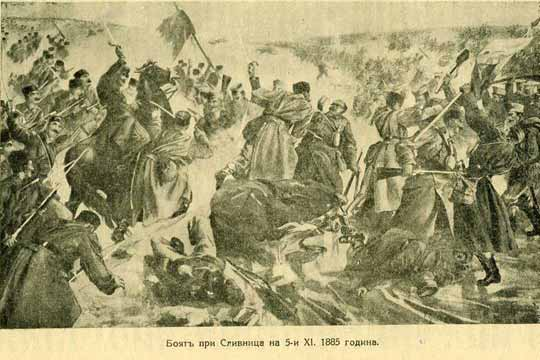
I remember the roar of the artillery during the battle of Slivnitsa. during the Bulgarian-Serbian War in 1885. I can see the whole region as clearly as if it were today.
It is hard to imagine how my grandfather could have heard this as it was over two huderd miles away – but maybe he was told all about it.
I can see how every year in spring the Danube would flood and the road from Kozel near Berzasca would be a metre under water. The telegraph poles were the only landmarks. This lasted until the regulation of the iron gate.
I don’t know what this refers to. Maybe a reader can help.
I can see the whole area, every tree, every stone, everything as it stands before my eyes. I can see myself at the head of galloping horses in the pastures. I can see how, in 1885, they put up the cross in the local church in Schnellersruhe and a gust of wind tore it from the hands of the workmen and how the cross fell to the ground and shattered.
In a word, I remember all my friends and their surnames. I was very obedient towards Mr Guhs and his wife and I was very attached to them. Every morning I took my friend Guhs (without his wife knowing) a litre of vodka from the homestead. Vodka was Guhs’ one weakness/vice. Uncle Jan Heuza also lived in Guhs’ house. He was also a good man. He had to walk on crutches because he was disabled. I often went with him to the mill to grind flour. One day when we were at the mill, his clothes caught fire. He was so badly burnt that he died within a few days. After his death I had even more work to do. Although he was disabled, he had still managed to do a lot.
In 1886/7 I attended the first class of the school in Schnellersruhe. My teacher was Adam Mlezyra. I attach a letter to my grandmother (Appendix 4) (unfortunately, all enclosures and attached documents have been lost).
24 February 1889 my aunt died; she was the wife of Guhs. It was a great blow for us all. Guhs informed my father immediately. Of course, this meant that my stay in Schnellersruhe was now under a big question mark. My father received the letter on 5 March 1889 and on the same day he sent Guhs 50 guldens and on 8 March he sent me clothes and toys worth 42 Florins 85 . On 18 March I wrote a letter in Czech to my grandmother saying that my aunt (as I called Guhs’s wife) had died. I am enclosing it. (sadly no)
After a few months Guhs remarried, this time with the widow Hamata, in order to take care of me. The second wife was also very good, but I stayed away from her. She was not my first ‘teta’.
On 27 January 1890 Guhs received a letter from my father letting him know that he would take me back with him before the end of the year. Guhs replied immediately and asked my father to leave me with him. I also wrote to my father. “You write that I must come to you in Bosnia. I would like to go there to see you, but then I would like to come back here. I’d miss my Baci and Teta, I don’t know anyone there and I’d be afraid of the Turks.”
So time passed until September 1890, and on Monday 22 September at 5pm I arrived in Fojnica, accompanied by Guhs. From Schnellersruhe to Bersasca we were accompanied by my aunt and my friend Jan Klezywa. The next day , together with the gamekeeper Armanka, we arrived at the inland embarkation station of Drenkova.
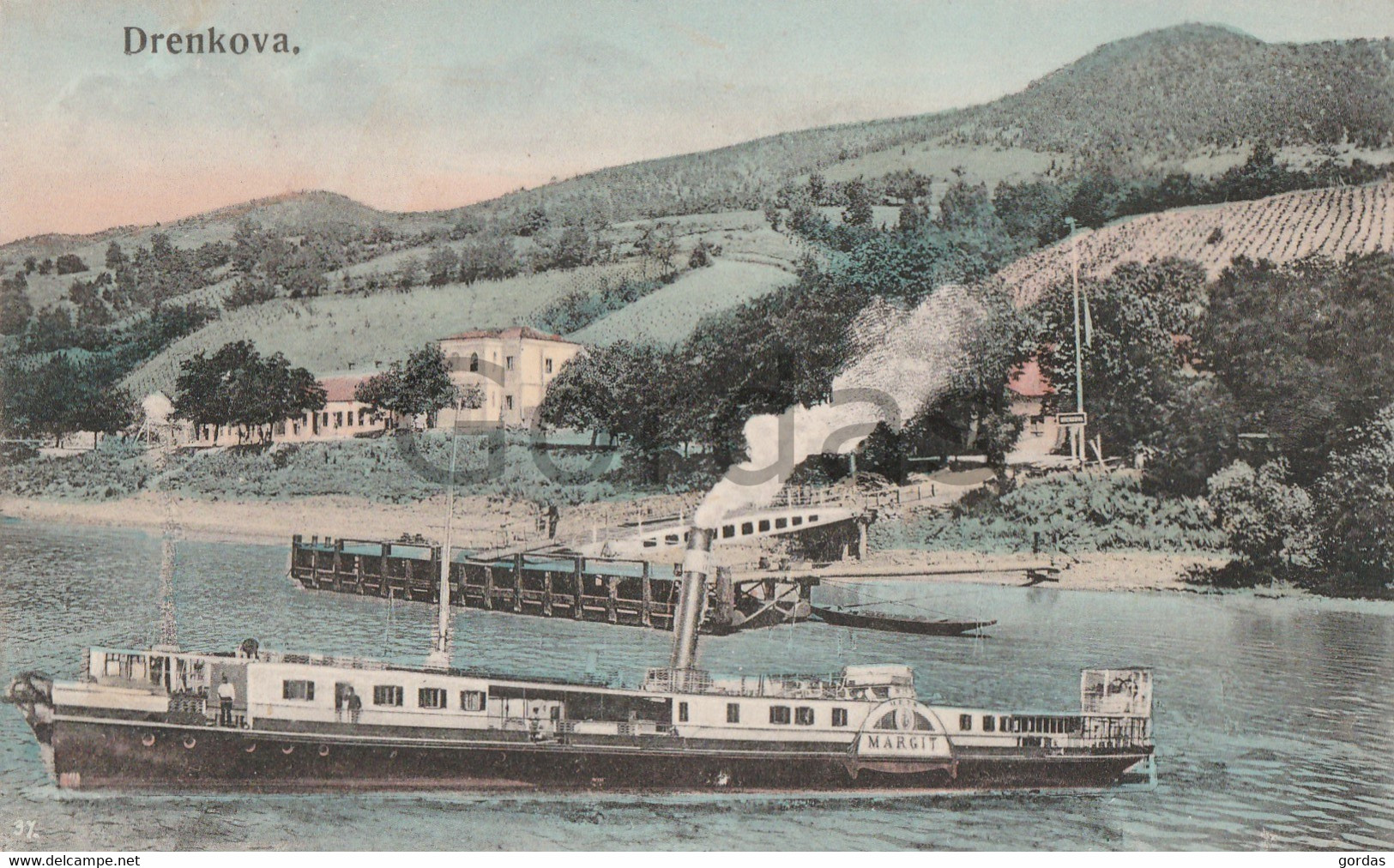
Here I said goodbye and took the boat with the tide to Bosnia Bred.
Names have changed so many times in this part of the world. I spent a few hours yesterday trying to find this place. Possibly it is called Brod now, but there are hundreds of villages called that! If anyone can help – please do.
I
 Life Through Basia's Eyes
Thank you Basia. Fascinating as always.
LikeLiked by 1 person
Your grandfather had an exceptional memory for names, places, dates, events.
LikeLiked by 2 people
yes. He had a lot of documents which he appended to his story originally, but I imagine they were all lost during the war. He originally worte this in German I believe. My father had it translated into Polish, and that is the version I am working from.
LikeLiked by 2 people
He is an excellent storyteller.. 😊
LikeLiked by 1 person
Yes – unfortunately I kave very little more of his story.
LikeLiked by 2 people
Shame!
LikeLiked by 1 person
This is all very interesting, Basia. I am always fascinated by people and their different lives. It certainly teases the imagination. Thank you! Best wishes.
LikeLiked by 2 people
Thank you. And best wishes to you too
LikeLiked by 2 people