In spring 1987 I went to visit my maternal grandmother in St Mary Abbots hospital in Kensington. It was the last time I saw her. She had spent the last seventeen years or so in various hospitals because she was suffering from what was known as presenile dementia, which was probably brought on, though no-one said it at the time, by post traumatic stress disorder- a result of her immense suffering during the war. ( She had been deported from Lwów to Siberia with her two young daughters aged ten and three, as an enemy of the people. Her crime – being the wife of a university worker. I’ve written about this before.)
She had previously been institutionalised in Banstead Mental hospital for about ten years. My mother visited almost every weekend and it broke her heart. Banstead was huge, Victorian, understaffed, cold and covered in a thick veil of misery and despair. Old people sitting in a huge circle with their mouths slack and their stockings round their ankles, staring into space. They were clean. They were fed. And that was it.
I made a fuss about the stockings when I went. My mother didn’t want me to. She thought it would reverberate on her mum. Luckily it didn’t and from then they were dressed with dignity. At least on Sundays.
But then Banstead closed. The powers that be decided it was no longer financially viable, the land was sold off and the patients dispersed. Luckily my grandmother was moved to central London so easier for me to get to.
My mum didn’t like me going because I was always upset. But I felt I had to.
I took some tulips and took a deep breath and went into her ward.
At first I was impressed. Only six patients. All dressed well. All the staff were young and lively and in their own clothes. I looked around for a vase and gave my grandma the tulips to hold. Oh dear. She started putting them in her mouth. Her dementia had increased significantly. Luckily one of the young girls noticed and took them from her. So far so good.
I began to talk to my gran and tried to show her some photos of the family. No recognition whatsoever. I tried telling her about my two very young children – no reaction. We drank tea. Then I noticed her little red signet ring. I asked her where it was from. At this point she began to twist it around her finger and as she did she smiled. A beautiful, beatific dreamlike smile. I was so pleased that something still gave her happiness. I knew that the ring had been a gift from a gentleman friend that she had for several years when I was a little girl. Pan Gadomski. He was rarely spoken about at home – I don’t know, but possibly because my mother didn’t want her father’s memory sullied.
After this visit I came home quite upset. But then I had a brainwave. I
noticed that there was no stimulus of any kind on the ward. A blaring tv which no one watched. A few ragged women’s magazines which the staff flipped through from time to time. Some of the patients were muttering to themselves, one was shouting obscenities, but no one took any notice of anyone. A desperately sad situation. Was it as bad as Banstead? I don’t know.
But I could see that these women were rapidly regressing into childhood. I had two small children and the thought came to me that they would all be happier if they had toys and objects to hold. At home we had all sorts of puzzles and activity centres. Bells, musical things, lcolours. Tactile stuff. Dolls . Al designed to develop children’s brains. Surely sensory stuff like these could help stimulate people with dementia – if not reverse any process, but possibly delay it or at least temporarily entertain
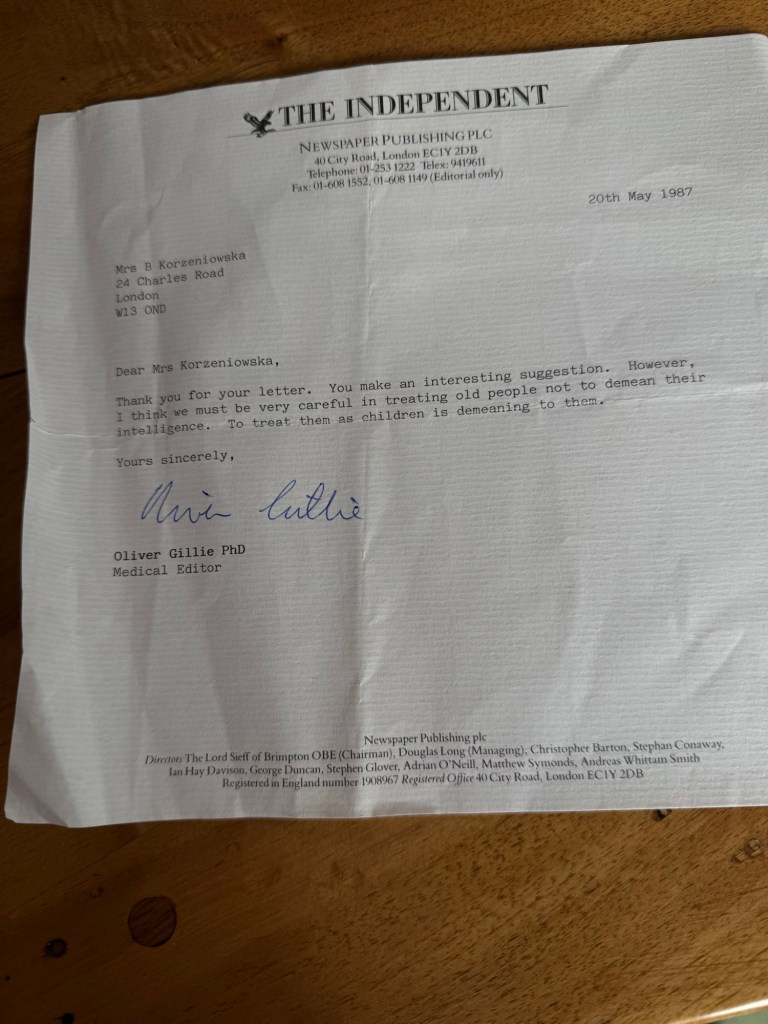
I was a fan of the Independent at the time. So I wrote all my thoughts and received this shirty missive back.
I wonder if Mr Oliver Ghillie PhD has changed his mind. He didn’t read my letter properly when he dismissed my ideas. I certainly didn’t suggest old people should be treated as children. Merely that they could be occupied in different ways
It is now common practice when dealing with dementia patients to stimulate them in many ways, including toys, dolls and games. No one suggests this is demeaning or patronising.
I cancelled my subscription to the Independent. Sadly I never saw my grandma again as she died soon after. But I kept the letter!


It’s heartwarming to see the editor’s letter to you. Hopefully, the reporters will refrain from jumping to conclusions in the future.
LikeLike
Very thoughtful of you Basia. It is so important to continue to think of new ways to keep seniors active and engaged in ways that are meaningful to them. 🙂 Thank you for sharing!
LikeLike