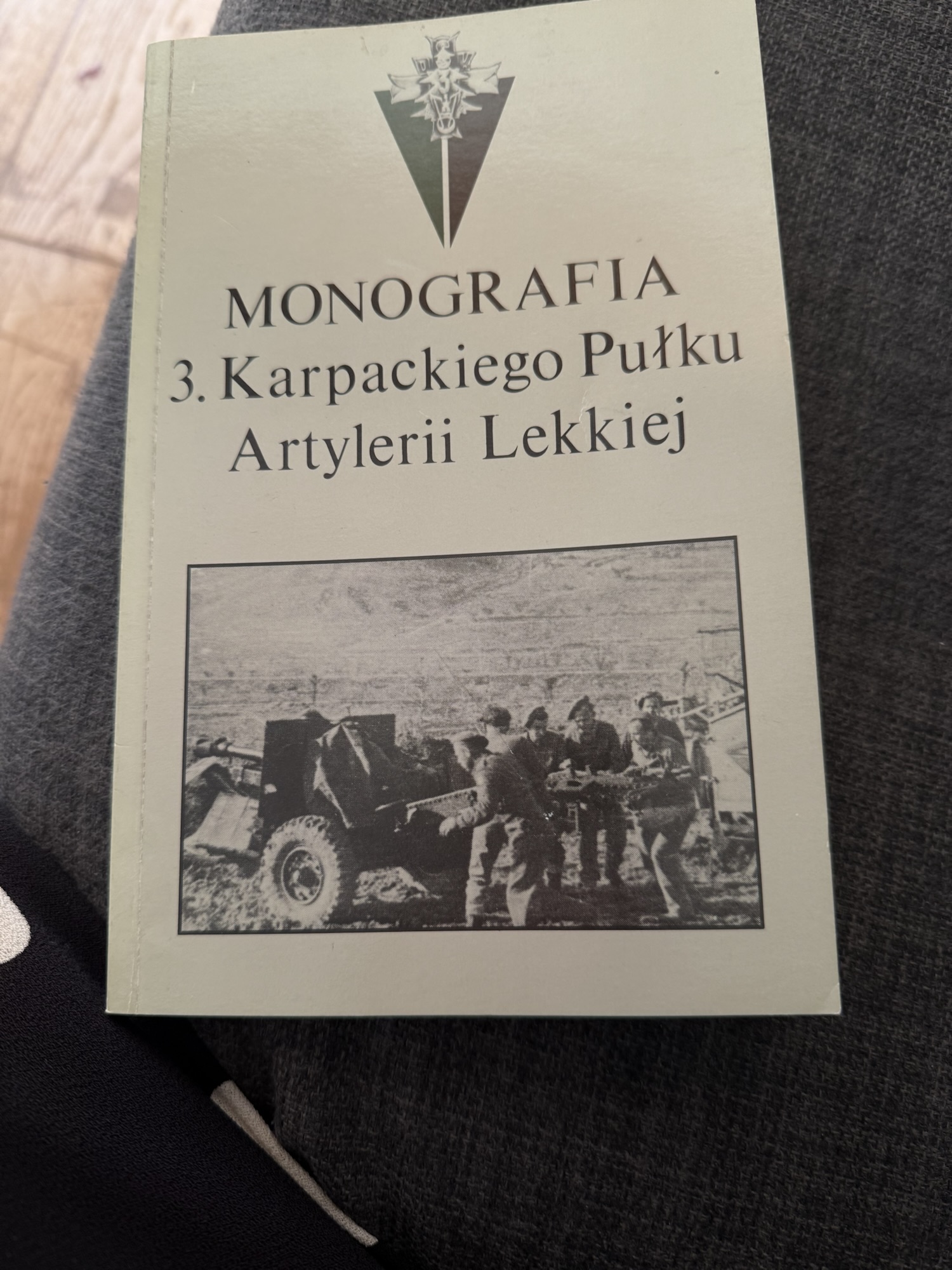
Today is 87th anniversary of the beginning of WW2. My father together with many thousands of others was deported -as an enemy of the people – to Siberia from his home town Lwów in early 1940. After a horrific winter in the depths of Kazakhstan he was finally released after the so called amnesty and made his way through Persia and the Middle East until he ended up in the Battle of Monte Cassino.
Here is an anecdote he wrote down for a commemorative album of his unit. I append the Polish original at the end
Jan Wysoki
SOLDIER’S LUCK
It was the fourth of July 1944. A sunny day, not a cloud in the sky, and although it was already well into the afternoon, it was still hot. To our left Castelfidardo was burning, a town famous for making beautiful accordions.
I was a forward observer and my task was to support the 7th Regiment of British Hussars, which was supposed to reach the River Musone. I had with me an armoured White Scout Car, its driver and two radio operators. Quite a serious assignment for an officer cadet.
The driver, Włodzimierz Kołomyjec, had already travelled a good stretch of the Italian boot with me and although back on his father’s farm he had driven horned oxen, he was by no means a bad driver and even looked quite at home behind the wheel.
The senior radio operator, Wojtek Morawski, was twenty. He was a good soldier and, on top of that, sang nicely and played all sorts of musical instruments. Now he was shedding bitter tears because all the accordions would burn together with the town of Castelfidardo and he so badly wanted to have one. His younger companion, Janusz Stokowski, consoled him, assuring him that some little accordion or other would survive for him. Janusz was still just a boy. No one knew how many years he had added to his age in order to become a soldier. Everyone liked him for his boyish youth and his laughing eyes. They called him ‘Sonny’. Janusz hated that terribly because he really wanted to be a grown man already, yet, just to spite him, his moustache simply refused to grow, although he scraped at it mercilessly every Saturday.
The tanks of the British Hussars were to reach the River Musone and from the river onwards our 5th Battalion was to take over the advance. The terrain was difficult: hills overgrown with bushes as dense as African bush. The Hussars were in no hurry at all to enter that thicket. Their commander, a captain, sturdy as a young bull, kept pointing out targets to me, which I shelled one after another. But what was the use when the tanks kept milling about in the same place?
I was in constant contact with my battery commander, Lieutenant Rudzki. He was already beginning to grow impatient that, in relation to the number of shells fired, we were making no progress at all.
Fortunately for me, by then my English was quite passable, so I was able to pass my commander’s observation on to the Hussar captain. It had an effect, because soon afterwards the steel boxes, though without enthusiasm, moved into the thicket. And we followed them, also without enthusiasm, in the tracks of their caterpillar treads. From then on it went just as it did during exercises. I laid my fire down ahead of the tanks and as soon as our guns stopped firing, the tanks moved forward, firing ahead of themselves with machine-guns and cannon.
And so it went on. At last a coolness came from the water. The tanks reached the river… The Hussar captain drove up to me and thanked me for the fire support. We wished each other soldier’s luck, after which he quickly withdrew from the position.
Immediately afterwards someone began hammering on the door of my armoured car. I was so certain it was one of our infantrymen that I threw the door wide open without a thought. A chill went through my bones: standing in front of me was a German armed to the teeth. He had several grenades tucked into his belt, a revolver hung at his side and across his chest he carried an ‘Ofenrohr’, with which he could have blown our armoured car apart with a single shot. I had nothing on me but binoculars… so, on the spur of the moment, I asked him:
‘Was wollen Sie?’
Which, translated into polite Polish, might be rendered as: ‘How may I be of service to you?’
At this polite question the German threw down his weapon, raised both hands and began asking me to take him prisoner.
‘Ach, so, that’s different!’
I jumped out of the vehicle and, now armed with the German revolver, took a closer look at him. He was over forty, unshaven, filthy and as exhausted as only a soldier can be exhausted. Once again my knowledge of German came to my rescue.
‘If there’s anyone else here with you, call him out at once,’ I ordered.
My prisoner ran over to the bushes and shouted loudly:
‘Fritz und Johann! Kommen Sie zu mir!’
As if on command, two more Germans jumped out of the bushes. They looked much alike because they were equally filthy, equally heavily armed and both over forty. They too obediently laid down their weapons and raised their hands.
They were from the 903rd Fortress Battalion.
Once Janusz and Wojtek, armed, had taken up positions beside me, there was no longer much to fear. And once the fear had gone, curiosity took over. So I began questioning the first prisoner about why they had surrendered.
‘We’d had enough of it,’ came the short reply.
‘And why did you choose my armoured car in particular?’
‘I was certain you were commanding the attack,’ came the answer.
I established radio contact with my commander, gave him a report on the progress of the attack and told him that the tanks had reached the river. Finally I added the news that I had three German prisoners. At first the lieutenant did not want to believe me about the prisoners, but eventually I convinced him that I had them right there with me… After thinking it over, he ordered me to take their weapons and documents and hand the men themselves over to the infantry.
The next day our observation post moved to Monte Pellegrino, five kilometres nearer Ancona than the River Musone where we had been the day before. The hill seemed an ideal place, far removed from all the worries my lieutenant disliked so much. He now sat bent over a map, carefully writing things down and making calculations. I decided not to disturb him that day because, after all, the day before I had been the one with my hands full. Our hill ended in a steep escarpment, beyond which lay a field of maize. I decided to walk over that way.
I reached the edge of the hill, looked down to the bottom of the escarpment and could hardly believe my eyes, because down below, like mushrooms after rain, German helmets had suddenly sprung up before me, one beside another. And among them the protruding barrels of their automatic weapons. How many were there? Who could say… Fear probably multiplied them in my eyes into an entire platoon. They had their backs turned and clearly had no idea I was there, while I stood above them wondering what to do. If you start running, reason told me, you may get a burst in the back from those barrels… There is only one way out: you have to take them through fear, by surprise and fear.
And before I had even finished the thought, a mighty shout tore itself from my throat:
‘Hände hoch!’
And immediately afterwards, now calmly, I gave the next orders:
‘Come out to me, one at a time, and lay your weapons down in front of me.’
The Germans obeyed. They began climbing the slope of the escarpment, laying down their weapons one by one and standing obediently in front of me with their hands raised. I quickly grabbed the first revolver that had been thrown down, because once again all I had with me was my binoculars… I felt rather more secure now. When four of them were already standing in front of me, I thought that surely that was enough for one poor officer cadet. But meanwhile just as many again crawled out of the hollow. A whole section, together with their commander, a sergeant, and one with an Iron Cross at his collar.
Among the weapons they had laid down were sub-machine guns, several revolvers and a Spandau on a tripod, while I had only my binoculars…
We began walking towards the post.
‘Schnell, schnell,’ I urged the Germans along, because I did not like being alone among them. When we were already close, my nerves gave way and I began yelling at the top of my voice:
‘Kołomyjec, get the Tommy gun and come and help!’
Włodek came running to help me, unwrapping the Tommy gun from its oil-soaked rags.
We brought the prisoners up to a white cottage, and there the German sergeant stood rigidly to attention in front of me, clicked his heels loudly, as if someone had fired a cork out of a bottle, and asked whether he might request something.
‘Say what you want.’
‘I would like to ask permission to take off my boots.’
Naturally, I agreed. When the whole lot of them had taken off their boots and their sweat-soaked socks, I saw how lucky I had been. The Germans’ feet were covered in blisters and their socks were drenched with sweat. They must certainly have been marching all night and had no strength left for any resistance. I had been lucky…
When at last the prisoners had finished tending their sore feet, I began questioning them one after another about which unit they belonged to and where they had been born. One of them told me that he had been born in Toruń.
‘In Toruń? And where is this Toruń?’ I asked, playing innocent.
The German, standing rigidly to attention, barked back at me:
‘It is a German city in Pomerania.’
At that, fury seized me. I brought all the Germans to attention and, ordering them to do twenty squats, commanded them to chant:
‘Toruń was, is and always will be a Polish city.’
After twenty squats they lay on the ground scarcely able to breathe. They certainly remember to this day whose city Toruń is.
Now, when I think back over the whole adventure, it seems to me that I had a great deal of luck in coming out of it in one piece. To this day my comrades cannot get over the fact that I did not carry a weapon with me, only binoculars. The reason was simply that, as an officer cadet, I was not entitled to a revolver and lugging a Thompson and a map case around the Italian mountains was rather inconvenient. So I had only my binoculars…
In the next war I shall already be entitled to a revolver, so things will be easier.
Note: I met Janusz Stokowski who was indeed much much younger than my dad( who was 25 at the time of this event). He had a beautiful Italian wife Marcellina who went back to Rome after she was widowed, but kept in touch with me for many years.
Jan Wysoki
SZCZĘŚCIE ŻOŁNIERSKIE
Był czwarty lipca 1944 roku. Dzień słoneczny, niebo bez chmurki, i chociaż było już dobrze po południu, jeszcze grzało. W lewo od nas płonęło Castelfidardo, miasto słynne z wyrobu pięknych harmonii.
Byłem wysuniętym obserwatorem, a zadaniem moim było wspieranie 7. pułku brytyjskich huzarów, który dotrzeć miał do rzeki Musone. Miałem ze sobą pancerny wóz White Scout Car, jego kierowcę i dwóch radiotów. Jak na podchorążego, dość poważne zadanie.
Kierowca, Włodzimierz Kołomyjec, objechał już ze mną spory kawał włoskiego buta i choć na gospodarstwie ojcowskim rogate byki poganiał, był wcale niezłym kierowcą i nawet mu do twarzy było za kierownicą.
Starszy radiota Wojtek Morawski miał lat 20. Był to dobry żołnierz, a do tego ładnie śpiewał i grał na przeróżnych instrumentach muzycznych. Teraz wylewał gorzkie łzy, że razem z miastem Castelfidardo spłoną wszystkie harmonie, a on tak chciałby jedną mieć. Pocieszał go jego młodszy kolega Janusz Stokowski, zapewniając go, że jakaś tam harmoszka uchowa się dla niego. Janusz to jeszcze dzieciak. Ile dodał sobie lat, by być żołnierzem, nie wiedział nikt. A lubiany był przez wszystkich, za swe chłopięce lata i śmiejące się oczy. Nazywano go Synkiem. Janusz nie lubił tego okropnie, bo chciał naprawdę być już dorosłym, a tu, jak na złość, wąs ani rusz nie chciał rosnąć, choć skrobał go bez litości w każdą sobotę.
Czołgi brytyjskich huzarów miały dotrzeć do rzeki Musone, a od rzeki dalsze natarcie przejąć miał nasz 5. batalion. Teren był trudny: pagórki porośnięte krzakami gęstymi jak busz afrykański. Huzarom wcale nie spieszno było wchodzić w ten gąszcz. Ich dowódca, kapitan, mocny jak byczek, raz po raz pokazywał mi cele, które ostrzeliwałem po kolei. Cóż z tego, kiedy czołgi kręciły się wciąż w jednym miejscu.
Miałem ciągłą łączność z moim dowódcą baterii, porucznikiem Rudzkim. Ten już zaczynał się niecierpliwić, że w stosunku do wystrzelanych pocisków nie robimy żadnych postępów.
Na szczęście dla mnie mój język angielski już wtedy był zupełnie znośny, mogłem więc kapitanowi huzarów przekazać uwagę swojego dowódcy. Poskutkowało, bo zaraz potem stalowe pudła, choć bez entuzjazmu, ruszyły w gąszcz. A my za nimi, też bez entuzjazmu, ruszyliśmy po śladach ich gąsienic. Dalej szło już tak, jak na ćwiczeniach. Kładłem swój ogień przed czołgami, a kiedy tylko nasze działa przestawały strzelać, czołgi szły naprzód strzelając przed siebie z maszynowej broni i dział.
I tak to szło. Wreszcie powiało chłodem od wody. Czołgi dotarły do rzeki… Kapitan huzarów podjechał do mnie, podziękował mi za wsparcie ogniowe; pożyczyliśmy sobie żołnierskiego szczęścia, po czym szybko wycofał się z pozycji.
Zaraz potem ktoś załomotał w drzwi mojej pancerki. Byłem tak pewien, że to jeden z naszych piechurów, iż bez obawy otworzyłem szeroko drzwi. Mróz przeszedł mi po kościach: przede mną stał Niemiec uzbrojony po zęby. Miał kilka granatów za pasem, rewolwer wisiał mu u boku, a przez piersi przewieszoną miał „offenrohre”, z której jednym wystrzałem wysadzić mógł naszą pancerkę. Przy sobie miałem tylko lornetkę … więc zapytałem go z głupia frant:
– Was wollen Sie? – co na grzeczny język polski tłumaczyć można: „Czym mogę panu służyć?” Niemiec na to grzeczne zapytanie wyrzucił broń, podniósł obie ręce do góry i zaczął prosić abym go wziął do niewoli.
– Ach tak, to co innego! – Wyskoczyłem z wozu i, już uzbrojony w niemiecki rewolwer, przyjrzałem się Niemcowi. Był po czterdziestce, nieogolony, brudny i tak zmęczony, jak tylko żołnierz może być zmęczony. Znów ratowała mnie znajomość języka niemieckiego.
– Jeśli tu jeszcze ktoś z tobą jest, wołaj go zaraz – rzuciłem rozkaz. Mój jeniec podbiegł do krzaków i głośno zawołał:
– Fritz und Johann! Commen Sie zu mir!
Jak na komendę z krzaków wyskoczyło jeszcze dwóch Niemców. Podobni byli do siebie, bo tak samo brudni, tak samo uzbrojeni i też po czterdziestce. Złożyli też posłusznie broń i podnieśli ręce w górę.
Byli z 903 batalionu fortecznego.
Gdy uzbrojeni Janusz i Wojtek stanęli przy mnie, można się było już nie bać. No, a kiedy odleciał strach, ciekawość wzięła górę. Zacząłem więc wypytywać pierwszego jeńca dlaczego się poddali.
– Mieliśmy już tego dość – padła krótka odpowiedź.
– A dlaczego wybrałeś właśnie mój wóz pancerny?
– Byłem pewien, że ty dowodzisz natarciem – padła odpowiedź.
Nawiązałem kontakt radiowy ze swym dowódcą, zdałem mu raport o przebiegu natarcia i o tym, że czołgi dotarły do rzeki, w końcu dodałem wiadomość o trzech niemieckich jeńcach. Porucznik w jeńców nie chciał najpierw wierzyć, lecz później go przekonałem, że mam ich tu ze sobą… Po namyśle kazał mi zabrać ich broń i dokumenty, a ich samych przekazać piechocie.
Na drugi dzień nasz punkt obserwacyjny przeniósł się na Monte Pellegrino, od wczorajszej rzeki Musone o 5 km bliżej Ankony. Pagórek ten zdawał się być idealnym miejscem – dalekim od trosk, których tak bardzo nie lubił mój porucznik. Siedział teraz pochylony nad mapą i coś tam notował i obliczał uważnie. Postanowiłem nie przeszkadzać mu dziś, bo ostatecznie przecież wczoraj ja miałem ręce pełne roboty. Nasze wzgórze kończyło się stromą skarpą, za którą rosło pole kukurydzy. Postanowiłem przejść się w tamtą stronę.
Doszedłem do skraju pagórka, spojrzałem z góry na dno skarpy i oczom swym nie chciałem wierzyć, bo tam na dole, jak grzyby po deszczu, wyrosły mi w oczach hełmy niemieckie; jeden przy drugim. A między nimi sterczące lufy ich automatów. Ilu ich tam było? Któż tam wie… Strach w oczach pomnożył mi to chyba w pluton cały. Odwróceni na pewno nie widzieli nic o mnie, a ja stałem teraz nad nimi medytując co robić. Zaczniesz uciekać – mówił mi rozsądek – możesz dostać w plecy serię z tych luf… Jest jedno tylko wyjście: trzeba ich strachem wziąć – zaskoczeniem i strachem. I jeszcze nie dokończyłem swej myśli, gdy z gardła wyrwał mi się potężny krzyk: „Hände hoch!” a zaraz potem, już spokojnie, wydawałem kolejne rozkazy:
– Wychodzić do mnie, jeden po drugim, i składać przede mną broń.
Niemcy usłuchali rozkazu. Zaczęli piąć się po zboczu skarpy; składali swą broń po kolei, stawali posłusznie przede mną z rękami uniesionymi w górę. Szybko chwyciłem za pierwszy rzucony rewolwer, bo z sobą miałem znowu tylko lornetkę… Teraz mi było już raźniej. Kiedy już czterech ich stanęło przede mną, pomyślałem, że na biednego podchorążaka to chyba wystarczy. A tu tymczasem jeszcze drugie tyle wylazło z tego dołu. Cała drużyna razem z dowódcą sierżantem, i to z Krzyżem Żelaznym pod kołnierzem.
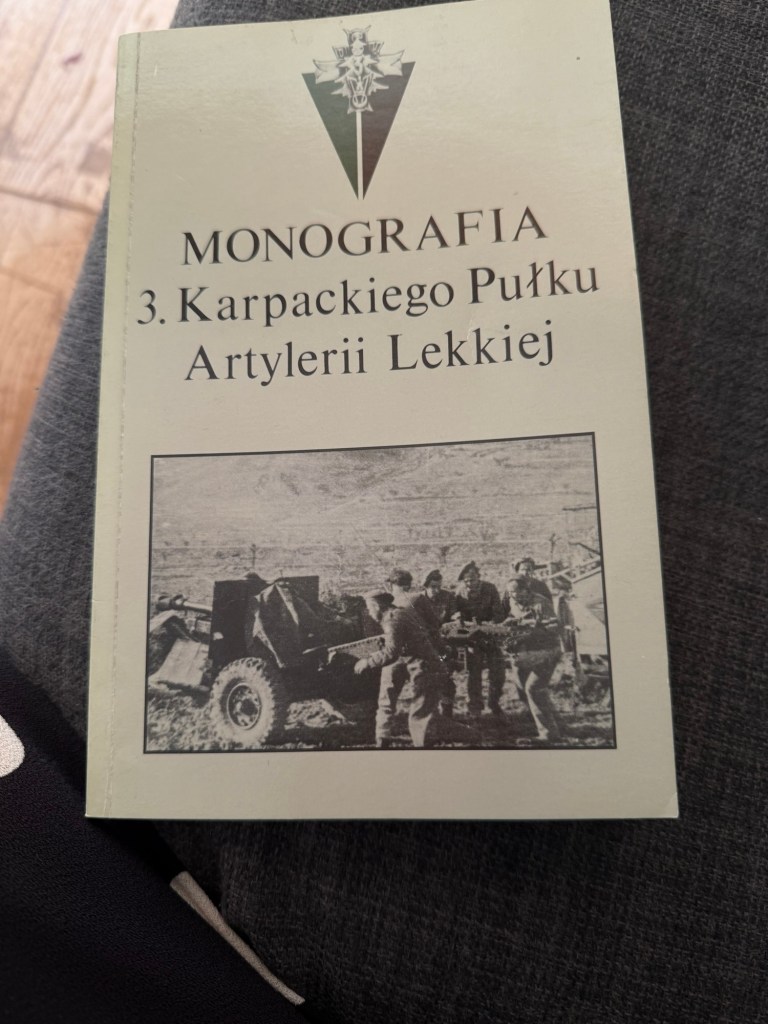
W złożonej broni były pistolety maszynowe, kilka rewolwerów, spandau z trójnogiem, a ja miałem tylko lornetkę…
Zaczęliśmy iść w kierunku punktu. „Schnell, schnell” – podpędzałem Niemiaszków, bo nie podobała mi się moja samotność między nimi. Gdy byliśmy już blisko, nawaliły mi nerwy; zacząłem drzeć się na całe gardło:
– Kołomyjec, weź tomigan i chodź na pomoc!
Włodek biegł mi z pomocą rozwijając tomigan z naoliwionych szmat.
Podprowadziliśmy jeńców pod biały domek i tam niemiecki sierżant stanął przede mną wyprostowany jak świeca, obcasami uderzył głośno, jakby z korkowca ktoś wystrzelił, i zapytał się czy może o coś poprosić.
– Mów, czego chcesz.
– Chcę prosić o pozwolenie zdjęcia butów.
Oczywiście zgodziłem się na to. Gdy całe to towarzystwo pozdejmowało buty i przepocone skarpetki, wtedy zobaczyłem, jakie miałem szczęście. Stopy niemieckie były pełne pęcherzy, skarpetki przemoczone potem. Maszerowali na pewno przez całą noc i brak im było sił na wszelki opór. Miałem szczęście…
Gdy wreszcie jeńcy skończyli opatrywać swe obolałe stopy, zacząłem wypytywać ich po kolei z jakiego są oddziału i jakie jest ich miejsce urodzenia. Jeden z nich powiedział mi, że urodził się w Toruniu.
– W Toruniu? W gdzie to jest ten Toruń? – Zapytałem z głupia frant.
A Niemiec z postawy na baczność wyszczekał mi:
– Jest to niemieckie miasto na Pomorzu.
Wtedy wściekłość mnie porwała. Postawiłem wszystkich Niemców na baczność i każąc im robić 20 przysiadów rozkazałem im skandować:
– Toruń był, jest i zawsze będzie polskim miastem.
Po 20 przysiadach leżeli na ziemi ledwo dysząc. Na pewno pamiętają jeszcze do dziś czyim miastem jest Toruń.
Teraz, gdy rozmyślam nad całą swoją przygodą, wydaje mi się, że miałem dużo szczęścia, iż cało wyszedłem z tego. Moi koledzy do dziś nadziwić się nie mogą, dlaczego nie nosiłem przy sobie broni, tylko lornetkę. A to po prostu dlatego, że jako podchorążemu nie przysługiwał mi rewolwer, a z thompsonem i mapnikiem ciągać się po górach włoskich było mi trochę nieporęcznie. Miałem więc tylko lornetkę…
Na następną wojnę już przysługiwał mi będzie rewolwer, sprawa więc będzie łatwiejsza.
 Life Through Basia's Eyes
This is an interesting story from a point of view of the Eastern Front. We usually hear stories from the Western Front regarding Nazi soldiers realizing that Germany was losing the war badly. Thank you for sharing.
LikeLiked by 1 person
Amazing story. Considering that there were so many different nationalities among the Allied armies fighting in Italy, it’s remarkable that there haven’t been major Hollywood films on the subject. I can only think of one – ‘Anzio’ from 1968.
LikeLike